



By Ali Rabiu Ali, Dutse
Every rainy season, the waters return to Jigawa’s riverine communities sometimes quietly, sometimes with devastating force. For residents of Hadejia, Miga and Auyo local government areas, flooding has become less of a surprise and more of a seasonal reality, shaping livelihoods, displacing families and testing the limits of government response.
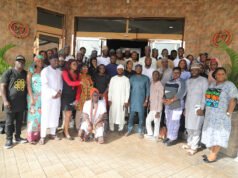
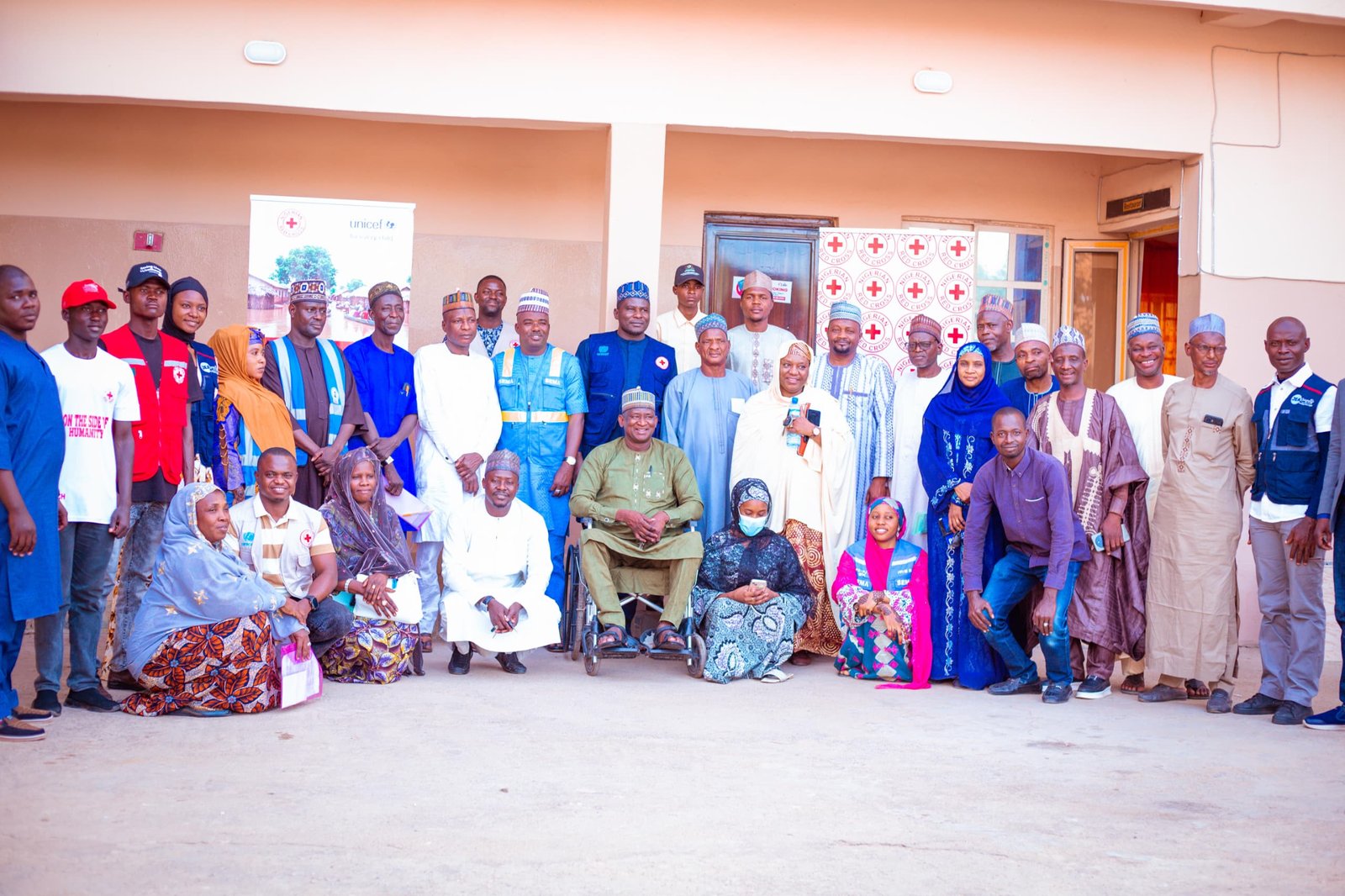
It was against this backdrop that a team from the Nigerian Red Cross Society (NRCS), supported by UNICEF, arrived in Jigawa for what they described as both a promotion and close-out of a flood preparedness and resilience project.
“We are here to look back at the impact of flooding and, more importantly, how communities can prepare ahead of time,” said Timothy Ali-Yohana, who works with the NRCS disaster management department coordinating responses across Nigeria. “This project is about supporting Jigawa communities to be resilient, especially in flood-prone areas like Hadejia, Miga and Auyo.”
The project, titled “Strengthen North-West Nigeria’s Emergency Preparedness, Cash Preparedness, and Shock-Responsive Social Protection Regarding Recurrent Flood Risks,” was designed to move flood response beyond emergency relief into prevention, preparedness and local ownership.
Flood predictions by the Nigerian Meteorological Agency (NiMet) and the Nigeria Hydrological Services Agency (NIHSA) have in recent years consistently placed Jigawa among states at high risk. In 2025, the warnings were particularly stark, pointing to potential overflows linked to upstream dams such as Tiga and Challawa. Yet, unlike previous years, the impact was less devastating.
Ali-Yohana believes this was not accidental. “When the flood was predicted, the Jigawa State Government responded quickly. We saw actions like the fencing of dams and other preventive measures. That kind of early response matters,” he said, commending Governor Umar Namadi for what he described as proactive leadership.
But he was quick to add that infrastructure alone is not enough.
“Flood hazards will always come and go,” he said. “What matters is how we minimize their impact. For interventions to be sustainable, they must start from the local communities. Policies and structures won’t work if they don’t fit local realities.”
According to him, something as simple as early warnings communicated in local languages, or clear instructions on evacuation, can save more lives than complex policy documents that never reach the people.
Under the project, a series of activities were rolled out across the three LGAs. These included radio sensitisation programmes, house-to-house awareness campaigns, flood simulation exercises, and the development of Community Emergency Response Plans (CERPs) in collaboration with Local Emergency Management Committees (LEMCs).
Communities such as Ayama, Auyo, Gamahuwai and Katega in Auyo LGA; Sansani, Koya, Tsakuyawa and Hantsu in Miga LGA; and Jarbolla, Dubantu, Yankoli and Gagulmari in Hadejia LGA were directly involved.
“We didn’t just sit in offices,” Ali-Yohana explained. “We worked with government institutions, civil society organisations and the media to build capacity and form an advocacy team that can push for proper financing of disaster risk reduction, whether for floods or drought.”
Part of that effort culminated in the formation of the Jigawa Disaster Advocacy Group (JDAG), bringing together media professionals, CSOs, emergency agencies and partners like the Red Cross to speak with one voice on disaster preparedness.
For Mustapha Umar, Director of the Village Community Development Initiative, Jigawa’s recent experience shows that preparedness pays.
“Jigawa was identified by NiMet as one of the states with the highest flood risk,” he said. “But when you look at what happened, the flooding was not as devastating as predicted.”
He attributed this to measures taken by the state government, including embankment construction, improved drainage systems and political support given to key ministries and emergency agencies.
“These efforts helped to control erosion and flooding in riverine areas,” Umar said. “That is why we did not see the level of destruction many people expected.”
Still, he warned that the job is far from done, urging the government to “redouble its efforts” to reduce flood impacts to the barest minimum.
Beyond infrastructure and planning, one stubborn challenge remains human behaviour.
In previous floods around Ringim, Auyo and Hadejia, some residents living in high-risk riverine areas reportedly refused to relocate, even when advised by authorities.
“This is an attitudinal issue,” Umar said bluntly. “Government instructions are meant for the safety of the people. When people are asked to vacate an area because of danger, they should comply.
Refusing relocation puts lives at risk.”
Ali-Yohana echoed this concern, stressing that trust between communities and authorities must be strengthened. “If governments act quickly and practically, rather than being slowed down by paperwork, people will see that the actions are in their best interest,” he said.
A key outcome of the project has been a shift from reactive relief to proactive advocacy. Training sessions for media practitioners and CSOs focused on budget advocacy, power mapping and using evidence-based reporting to influence policy and secure state funding for disaster risk reduction.
Additional achievements included training warehouse staff on stock management, preparedness training for NYSC Red Cross volunteers, and beneficiary registration exercises in flood-affected communities.
For stakeholders, the lesson is clear: floods may be inevitable, but disasters are not.
“If communities are informed, involved and supported, flooding does not have to mean tragedy,” Ali-Yohana said. “Resilience begins at the local level.”
As climate risks continue to rise, Jigawa’s experience suggests that the future of flood management lies not only in concrete embankments, but in informed communities, responsive governance and sustained advocacy long after the waters recede.