




By Ali Rabiu Ali, Dutse
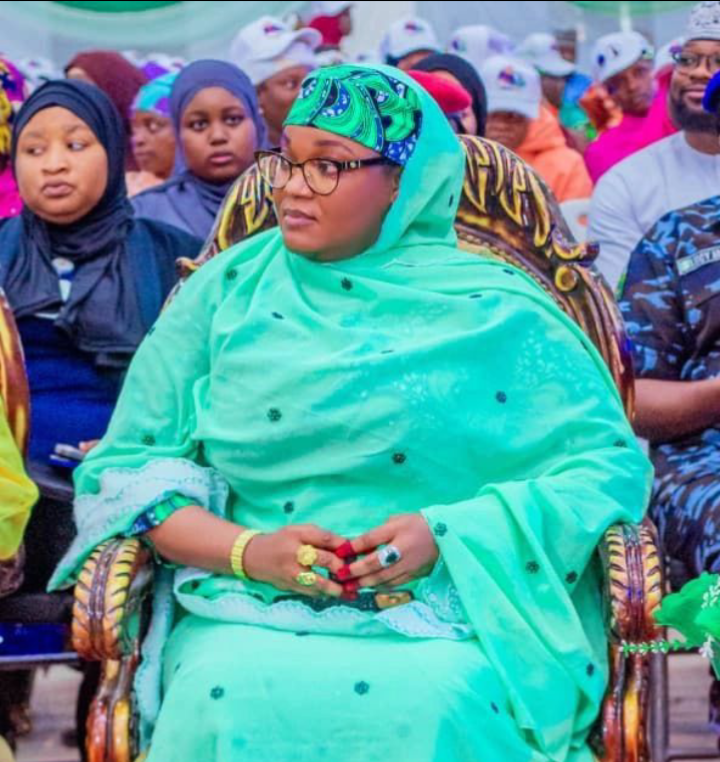
In many parts of Nigeria, the role of a First Lady is often ceremonial limited to public appearances and symbolic engagements. But in Amina Umar Namadi, the people of Jigawa State have found something different: a compassionate leader whose humanitarian programmes are quietly transforming lives across communities.
From women empowerment to education support, health advocacy, and humanitarian assistance for vulnerable families, Hajiya Amina Umar Namadi has steadily built a reputation as a First Lady whose influence goes beyond protocol.
Her work reflects a simple philosophy leadership should touch lives, especially those at the margins of society. As the wife of the Governor of Jigawa State, Umar Namadi, she has used her position to champion social welfare programmes that prioritize women, children, and disadvantaged groups.
Today, across Jigawa’s towns and rural communities, her name is increasingly associated with compassion, empowerment, and hope.
A Humanitarian Vision Rooted in Service
Those who have followed Hajiya Amina Namadi’s journey say her humanitarian spirit did not begin with the Government House.
Community members describe her as someone who has always believed that the strength of a society is measured by how it treats its most vulnerable citizens.
Under her leadership, the Office of the First Lady has evolved into an active platform for social development programmes that support widows, orphans, persons with disabilities, and struggling households.
Through her foundation and outreach initiatives, she has mobilised resources to support vulnerable families while also creating empowerment programmes designed to promote long-term economic independence.
For many beneficiaries, these interventions have been life-changing.
Empowering Women Across 27 Local Governments
Perhaps the most visible aspect of Hajiya Amina Namadi’s work is her commitment to women empowerment.
In a major intervention programme, she facilitated the disbursement of financial support to 2,700 women drawn from the 27 local government areas of Jigawa State, providing each beneficiary with grants to start or expand small businesses.
The initiative was designed not only as a poverty-alleviation measure but also as a strategy to strengthen women’s economic participation in society.
Across communities in Dutse, Hadejia, Gumel, Kazaure, and Ringim emirates, beneficiaries have used the funds to establish small enterprises such as tailoring shops, food processing businesses, trading ventures, and agricultural activities.
For widows and unemployed women, the empowerment programme has provided a new sense of dignity.
One beneficiary in Ringim described the programme as “a turning point that helped me support my family after years of hardship.”
Beyond financial support, the First Lady has also championed vocational training programmes designed to equip women with practical skills that can generate sustainable income.
Youth Empowerment and Economic Opportunities
Recognizing the growing challenge of youth unemployment, Hajiya Amina Namadi has extended her empowerment initiatives to young people across the state.
One of the flagship programmes in this area is the Kwashpap Mix Production Training Programme, which trained about 600 women and youths in the production of nutritious baby food and small-scale food processing.
Participants were trained not only in production techniques but also in entrepreneurship and business management.
The programme aims to help participants establish small businesses while also addressing child nutrition challenges through the production of locally made complementary food.
By linking empowerment with nutrition and entrepreneurship, the initiative demonstrates the First Lady’s holistic approach to development.
Supporting Education and the Future Generation
Education remains another pillar of Amina Namadi’s humanitarian agenda.
Believing strongly that education is the foundation of social progress, she has supported numerous initiatives aimed at improving access to learning materials and encouraging school attendance among children.
In one of her major educational interventions, she distributed about 60,000 exercise books to pupils across schools in Jigawa’s emirates, a programme designed to support students from low-income families and encourage academic learning.
She has also launched educational support programmes in several communities, including the distribution of school uniforms and learning materials to more than 1,000 pupils in Babura Local Government Area.
Such programmes, education stakeholders say, play an important role in addressing the challenge of out-of-school children while motivating pupils to remain committed to their studies.
For the First Lady, investing in education is not simply about schools it is about securing the future of the state.
Championing Health Awareness for Women
Healthcare advocacy is another sector where Hajiya Amina Namadi has demonstrated remarkable leadership.
Through health campaigns and medical outreach programmes, she has worked to raise awareness about maternal and child health, disease prevention, and the importance of early medical screening.
During breast cancer awareness activities in Dutse, she led public campaigns encouraging women to undergo regular medical check-ups and screening in order to detect the disease early.
Her advocacy efforts are particularly important in rural communities where awareness about such health issues remains limited.
By mobilizing partnerships with health organisations and development partners, her initiatives are helping expand access to health information and services for women.
Charity and Support for the Vulnerable
Beyond empowerment and advocacy programmes, Hajiya Amina Namadi is also known for her humanitarian outreach to vulnerable communities.
During the holy month of Ramadan, she launched a Ramadan Care and Support Initiative through which food items were distributed to widows, persons with disabilities, and low-income families across the state.
The initiative provided essential food supplies to help families cope with the economic challenges of the fasting period. Beneficiaries often describe her outreach programmes as acts of kindness that bring relief during difficult moments.
For many vulnerable families, such interventions demonstrate that leadership can be compassionate and responsive to the needs of ordinary citizens.
Environmental and Community Development
Hajiya Amina Namadi’s development agenda also includes environmental sustainability. In partnership with organisations such as UNICEF, she has supported a Waste-to-Wealth initiative, which trained hundreds of women in recycling plastic waste into marketable products.
The programme addresses two important challenges simultaneously environmental pollution and economic empowerment.
By turning waste into income-generating products, participants are able to earn a living while contributing to environmental protection.
A Leadership Style Defined by Humility
Despite her achievements, observers often point to one defining quality that distinguishes Hajiya Amina Namadi: humility.
Unlike many public figures who remain distant from the communities they serve, she is known for personally interacting with beneficiaries and listening to their concerns.
Residents often recount stories of how she engages directly with women, youths, and community leaders during programme visits.
For many people across Jigawa, this accessibility has strengthened trust between the government and the communities it serves.
Building a Legacy of Compassion
As the administration of Governor Umar Namadi continues to implement its development agenda, the humanitarian work of the First Lady complements the broader efforts to improve the living conditions of the people.
Through empowerment programmes, educational support, healthcare advocacy, and humanitarian outreach, Hajiya Amina Umar Namadi is gradually building a legacy rooted in compassion and service.
Across Jigawa today, the impact of her initiatives can be seen in the stories of women who have started businesses, children who returned to school, and vulnerable families who received support in times of hardship.
In the words of one beneficiary: “She is not just the First Lady of Jigawa. She is a mother to many of us.” And as her programmes continue to expand, it is increasingly clear that the quiet humanitarian work of Amina Umar Namadi is helping shape a new chapter of social development in Jigawa State.